

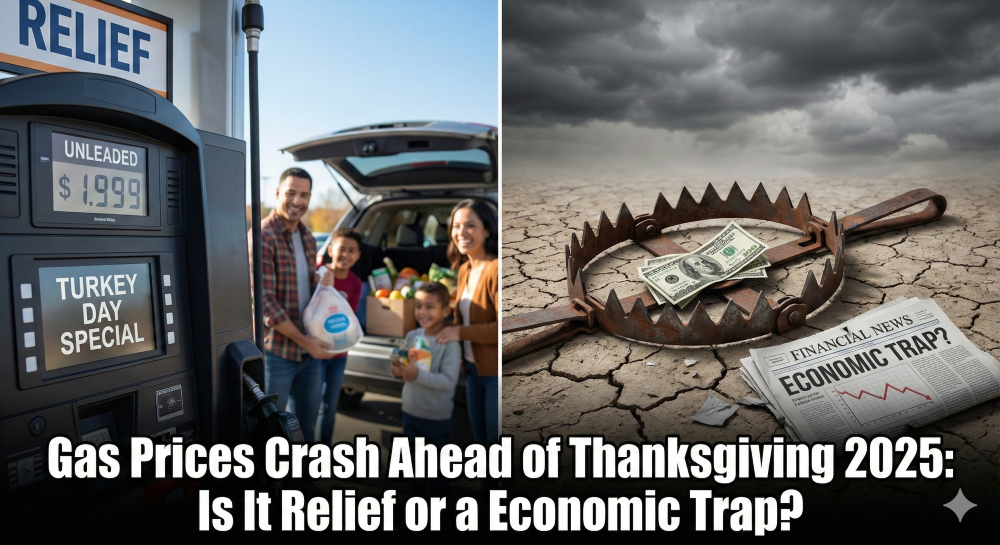
Thanksgiving 2025: Gas Prices Dip to Near Four-Year Lows, Affecting Consumer Behavior and Stocks
As millions of Americans gear up for road trips this Thanksgiving holiday in 2025, they are greeted by a dramatic decline in gasoline prices. Fuel costs are currently experiencing levels not seen in nearly four years, providing a much-needed financial break for holiday travelers. This unexpected drop in gas prices offers an opportunity for more affordable road trips; however, it exists within a broader context of economic uncertainties that are tempering the enthusiasm for travel.
The sharp decline in fuel prices translates into increased disposable income for consumers, functioning almost as an economic stimulus. Recent statistics suggest that while lower gas prices ease financial strains on households, concerns regarding a cooling economy and job security are dampening the overall appetite for holiday travel. This combination of affordable gas and cautious consumer spending presents a complex economic landscape as the holiday season approaches.
Current Gas Price Landscape: A Holiday Advantage
The current national average price for a gallon of regular gasoline is projected to be between $3.03 and $3.08 as Thanksgiving 2025 approaches. Although this figure may be slightly higher than certain points last year, it remains considerably more favorable compared to historical averages during the holiday season. Predictions from GasBuddy indicate that by Thanksgiving Day, prices may stabilize around $3.02 per gallon, making it one of the most economical holidays since 2021.
Regionally, states like Wisconsin and Ohio are benefiting from particularly low gas prices. As of late November 2025, Wisconsin drivers are witnessing prices ranging from $2.73 to $2.78 per gallon, significantly lower than previous months. Ohio’s prices are similarly attractive, with averages reaching approximately $2.857 per gallon. These trends underscore a more widespread drop in gas prices across various regions, aligning with seasonal factors and declining crude oil prices.
Factors Behind the Price Drop: A Combination of Market Dynamics
Several pivotal factors contribute to the decreasing prices at the pump. The transition to winter-blend gasoline, which is generally less expensive to produce, is a significant contributor, as refineries shift production methods in mid-October. Alongside this, a natural decrease in demand following the summer travel season also creates downward pressure on prices. Moreover, stable or declining crude oil prices, driven by factors such as excess global supply and policy changes from OPEC+, have been influential in this ongoing decline.
Consumer Behavior: Economic Caution Persists
Notably, despite the attractive gas prices, consumer behavior is showing signs of caution. Recent surveys reveal that only 60% of Americans plan to take a road trip this Thanksgiving, down from 72% in the previous year. This discrepancy indicates that while lower gas prices are advantageous, widespread economic anxiety, including fears of job security and stock market fluctuations, is restraining travel enthusiasm. Although 74% of survey respondents reported that gas prices did not impact their travel plans, a cautionary sentiment prevails, resulting in many choosing to stay local.
Winners and Losers in the Stock Market: Gas Price Impact on Corporate Fortunes
The current climate of low U.S. gas prices presents varying fortunes for different corporate sectors. Oil and Gas Producers, particularly those focused on exploration and production, are experiencing declines in profitability as lower crude prices directly affect their revenues. Companies like ExxonMobil and Chevron are facing challenges, while Downstream Companies and Oil Refiners see opportunities for enhanced profit margins due to lower input costs. This divergence in corporate performance offers insights for investors looking to navigate the stock market amid fluctuating fuel prices.
Conclusion: Navigating Economic Uncertainties Amid Low Gas Prices
The dip in U.S. gas prices leading into Thanksgiving 2025 signifies more than just immediate financial relief for consumers; it also highlights the intricate interplay of economic forces affecting consumer behavior and stock market dynamics. As low fuel prices encourage spending in various sectors, they simultaneously exist alongside broader uncertainties that might temper consumer confidence. Investors should remain attuned to evolving circumstances within the energy market, considering how these shifts might impact stocks in both the oil sector and industries reliant on consumer spending. The upcoming months will reveal whether this period of affordability translates into sustained economic benefits or if lingering economic concerns will prevail.